
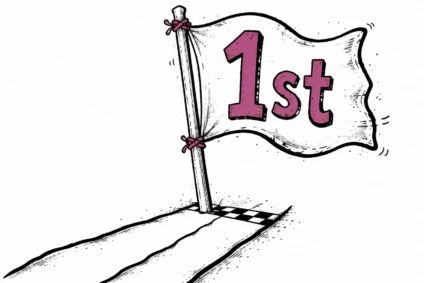


The world of trade marks is divided into “first to use” and “first to file” jurisdictions.
This is law, so it’s not quite so black and white and there are nuances but for the sake of this article we will split the world in two. In simple terms (again), “first to use” countries are typically ones that follow a Common law tradition and “first to file” are under Civil law. Common law is influenced by judicial precedent (how judge’s interpret laws and reach judgments); Civil law relies more on codes of law (a collection of statutes).
In a “first to file” country, perhaps obviously, the party filing a trade mark first is considered the first adopter of the mark in that country. This can lead to consternation when a business spots someone else has registered their mark elsewhere in a “first to file” country - “But they’ve just copied our brand!”
There are sometimes opportunities to challenge such trade marks. This could be on the grounds of bad faith. However, this is considered a serious accusation and the burden of proof will be on you to show the bad faith behaviour or at least establish there has been an inference of bad faith.
Sometimes unregistered marks, including trade names, may be accorded some scope to take action. These are sometimes time-barred.
Furthermore, many countries provide protection for “well-known trade marks”, marks that have widespread (global) reputation or recognition without necessarily being registered.
However, challenging these marks under any of the above routes involves a high evidential burden, usually lengthy legal cases (where the other party maintains their registration in the meantime) and will likely involve high costs.
This, however, does not mean it’s all hunky-dory in “first to use” jurisdictions either. Even if you have earlier use this does not mean you have an easy trump card to stop trade marks registered before you but later than you started using. On the flip side, a registration isn’t a green light to use.
The law of passing off in the United Kingdom protects goodwill (often defined as the “attractive force that brings in custom”) from misrepresentations from others that deceive the public and cause damage to the owner of the goodwill.
However, as with the other ways to object mentioned above, you need to prove your case and this carries an evidential burden. These can take a long time and can involve costs into four figures.
This can be very frustrating if you feel you are the legitimate owner of a brand. In particular, on e-commerce platforms, it is easy for owners of registered trade marks (and sometimes applications too) to takedown ‘infringing’ listings. You could have been selling for a number of years, but a third party comes along, perhaps seeing your success, and registers your brand ahead of you. They then look at bringing down your listings and being hugely disruptive to your successful e-commerce store.
This demonstrates the importance of early registration of trade marks. The expense of doing so should be seen as an investment in your brand. It’s actually not that expensive. Once registration is obtained it, in most countries, last for 10 years so if you divide the costs by 10, you will see that it represents good value.
Registration will give you a tool to stop others using confusingly similar marks on products or services close to yours. This doesn’t mean you have to be instigating expensive court actions; as above, it can be very effective in removing infringing listings on e-commerce sites in a cost-friendly way.
Registration also serves as a “keep off the grass” sign as parties will search the Registers before launching a brand and if there is already a registration this can have deterrence value.
If you have a successful brand and you have not looked to register it yet, it is not too late. Look to file and safeguard your brand. If you find yourself with a bit more time during these summer holiday months, consider it now.
It is worth mentioning that filing an application could provide notice and bring your attention to third parties who could potentially take issue with your application and even your use.
It’s therefore very worthwhile conducting searches, through a professional Trade Mark Attorney, before applying for registration. You could go as far as saying, it’s critical.
Searching looks at obstacles to your use and also to your proposed registration. If you have been using for a number of years without objections, you may feel comfortable that others are unlikely to come after your use after all of this time. However, it could be because you’re expanding as a business, going into different trading channels or could be looking to launch new product lines or services so you should be cautious of whose toes you could tread on.
Intellectual property (IP) is not only about high-end inventions. Nearly all companies are likely to have brands, many will have logos and product designs. With research indicating that IP “ownership boosts revenue, wages, and competitiveness, especially for SMEs”, IP really is for all.
If you’re a UK business looking to register your brand in the UK, you could look at doing it yourself. What I do is not rocket science! But Trade Mark Attorneys are legally and commercially trained to help and ensure you can clear a trade mark for use and registration, get the right trade mark for the right products and/or services, and provide strategic advice, including if you do find yourself in a dispute. I’m biased, of course, but I think that represents value for what is often your most important business asset(s), your brand(s).
If you’re an EU (or Ukrainian) business, there is an SME fund that opens up for periods at a time and allows you to be reimbursed (i.e. after paying) as much as 75% of the fees for an application and can be used whether you are looking to protect your brand at EU level or at national level, from the biggest countries like France and Germany to the smaller ones like Ireland, Luxembourg or Malta.
We would urge any SME to look at protecting their IP. And at the earliest possible time as we often find it can be a case of prevention is better than cure.
Get in touch if you would like some assistance.
Related
Hold the .phone (in your domain portfolio)
- Telecoms
- Tech
- Domains
- Brand Protection
- Trade Marks

When does a restomod stop being a Porsche?
- Automotive
- Trade Marks
- Brand Protection
Formerly Twitter prevails against Twitter.new
- Tech
- Trade Marks
- Disputes + Litigation
Suriname to introduce service marks
- IP Basics
- Trade Marks