


In a case before the Intellectual Property Enterprise Court (IPEC), internationally recognised artist Shantell Martin achieved a partial success in her infringement and passing‑off claims against Argentine winery Bodegas San Huberto and UK drinks distributor GM Drinks Ltd. The decision illustrates the line between general resemblance and substantial copying for the purposes of UK copyright protection, and raises broader questions about the protection of artistic style in the age of generative AI.
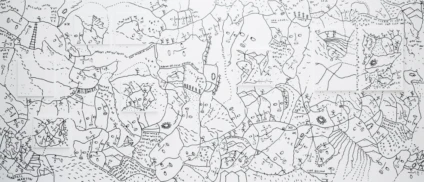
Martin created a large monochromatic line-drawing titled ‘Someday We Can’ in 2017 for an exhibition in New York. The dispute emerged when Martin discovered bottles of wine produced by Bodegas San Huberto affixed with labels that she considered reproduced her work, which had been imported and sold in the UK by GM Drinks Ltd.
Martin sent a cease and desist notice to Marc Patch, a director of GM Drinks Ltd, in April 2020, and in response a new label design was created. Martin considered that the new label still infringed her copyright, and complained to Patch again, at which point a third version of the label was produced. Martin considered that this version was still too close to her original work, and so took Bodegas San Huberto, GM Drinks Ltd and Patch to court, claiming copyright infringement under sections 18, 22, 23(a) and (b) of the Copyright, Designs and Patents Act 1988, and damages for passing off the imported products as though she had personally endorsed them.
The Court found that the first label design reproduced a substantial part of Martin’s work. As a result, GM Drinks Ltd was held liable both for copyright infringement and passing off.
However, the second and third label iterations were held not to reproduce a substantial part of Martin’s work. Although the judge acknowledged that the second label was “an attempt to move away” from the original design, both redesigns were considered sufficiently remote from Martin’s intellectual creation to avoid infringement.
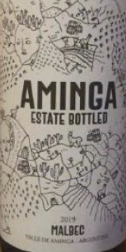

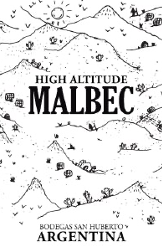
The details of the judge’s assessment can be seen in the table below:
Feature of Martin’s Work
|
First Label
|
Second Label
|
Third Label
|
Humanoid Faces
|
Present – key element of Martin’s style
|
Removed |
Removed |
Flowing, Interconnected Lines
|
Present – similar arrangement and perspective |
Present but simplified |
Present but different structure |
Dotted/Dashed Curves
|
Present – distinctive feature |
Removed |
Removed |
Overall Composition
|
Closely resembled Martin’s work |
Different layout, less distinctive |
Different layout, abstract |
Qualitative Similarity
|
High – core stylistic elements copied |
Low – lacks signature features |
Low – lacks signature features |
Court’s Finding
|
Infringement |
No infringement |
No infringement |
In the UK, copyright is infringed by the use of the whole or a substantial part of another’s work without permission. This decision underlines the qualitative nature of the “substantial part” test in UK law, following Infopaq. Copying itself is not enough for copyright to be infringed, the substantial part of the original work in question must ‘contain elements which are the expression of the intellectual creation of the author of the work’.
So, while in this case the Court noted that the second and third labels were clearly copies of the original, the resemblances between them were too general to be considered a substantial part of Martin’s own intellectual property but rather were found to be ‘common elements in the language of drawing’.
Notably, the Court declined to consider whether Martin’s distinctive artistic style could itself be protected by copyright law. Copyright protection currently only subsists in discrete works themselves rather than in the more nebulous concept of ‘style’, but the idea of some form of IP protection for artistic style is gaining in popularity in the light of recent advances in generative AI.
However, the Court did consider Martin’s artistic style under the tort of passing off, when assessing whether the necessary goodwill had accrued to Martin’s business through the public’s recognition of her style. The Court found that goodwill resides ‘in Ms Martin’s entire artistic output’ but declined to define the extent and limits of what her particular artistic style consists of, instead stating that ‘the images… demonstrate Ms Martin’s work and the goodwill that attaches to it in the UK much better than my attempt to describe it’.
This case serves as a practical reminder for brand owners of the fine line between copying and inspiration, but also serves as a warning that being on the right side of the line in a copyright context is not always enough. An artist with a well-established reputation and commercial success may be able to demonstrate goodwill in their ‘style’ sufficient to claim passing off, which has the potential to go further than the existing tests for copyright infringement.
While the use of AI was not at issue in this particular case, the successive revisions of the original label by Bodegas San Huberto, each moving just far enough away from Martin’s work to avoid infringement, calls to mind the kind of boundary testing that generative AI now enables at scale.
For IP professionals, the decision raises questions about the future of IP protection in the age of generative AI. The Court’s approach in this case avoids expanding copyright protection into the intangible concept of ‘style’ but raises fresh uncertainties. Should more abstract artistic styles, by quality of being inherently more distinctive than naturalistic or realistic styles, attract greater de facto protection through the tort of passing off?
As generative AI tools become more advanced, and outputs fine-tuned to fall just far enough away from original works, we anticipate that the Courts will return to the question of how far the concept of artistic style can, and should, complement the traditional tests for copyright infringement in the new IP landscape.
Related

Another effort by the U.S. Congress to protect name, image, and likeness rights
- AI
- Advertising
- Advertising + Marketing

Influencer content: The IP rights fashion brands need to secure
- Fashion
- Designs + Copyright
- Commercial Contracts
- Advertising + Marketing
U.S. Congress Contemplating Federal Right of Publicity
- AI
- Look-a-likes
- Celebrity
- Advertising
- Brand Protection
- Advertising + Marketing
Design Law in Motion: Phase II of the EU Design Reform has arrived
- Tech
- Designs + Copyright
- Brand Protection
- Creative