


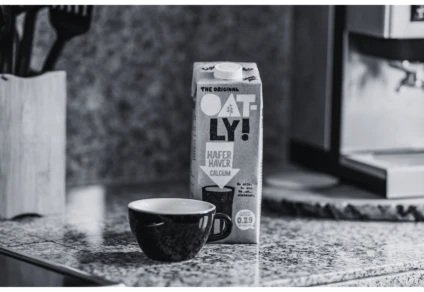


The Supreme Court has handed down its decision in Dairy UK Ltd v Oatly AB [2026] UKSC 4 and dismissed Oatly’s appeal, confirming that the trade mark POST MILK GENERATION (the “Mark”) is invalid.
The Appellant, Oatly AB (“Oatly”), is a Swedish company that produces alternatives to dairy products, including oat-based drinks. The Respondent, Dairy UK Ltd (“Dairy UK”), is the trade association for the UK dairy industry.
At the heart of the decision is the Court’s finding that the phrase functions as a designation (a term used in relation to food or drink) rather than as a distinctive name for the goods themselves. In particular, the Court held that the reference to “milk” operates as a descriptor for a category of products, not as an indicator of commercial origin. The Mark was also not rescued by the statutory proviso as the judges concluded that it does not clearly describe a characteristic of the goods, and even if it did, that characteristic is not expressed with sufficient clarity.
This decision means it’s a good time to review IP risk profile in packaging for dairy alternative products, particularly those in the milk aisle.
How did we get here?
The case concerns the validity of the trade mark “POST MILK GENERATION” which was registered by Oatly for oat-based milk substitutes and related products and has become one of the most significant trade mark cases in the UK’s plant‑based food sector. At its centre lies the question: Can a plant-based company use the word “milk” in its branding in relation to plant-based products even when framed as part of a slogan?
The Law
Under section 3(3)(b) Trade Marks Act 1994 (“TMA”), a trade mark cannot be registered if it is likely to deceive the public, including as to the nature or quality of goods and under section 3(4) TMA, a trade mark cannot be registered if its use would be prohibited by another law.
The legal provision central to this dispute, and tied to section 3(4) of the TMA, is Regulation 1308/2013/EU (“CMOR”) which was importantly retained post‑Brexit to become assimilated law meaning it continues to have effect in domestic law. Article 78 of the CMOR reserves the term “milk” exclusively for products derived from animals, therefore, plant‑based products may not use dairy designations unless a very narrow exception applies.
Moo-ving through the courts:
The case began in the Intellectual Property Office (“IPO”) following Dairy UK’s application for a declaration that the Mark was invalidly registered and challenged the registration on the following grounds:
- the Mark was deceptive because it contained the word “milk” in respect of goods not containing milk (s.3(3)(b) TMA), and
- the Mark was prohibited (s.3(4) TMA) due to the CMOR, which reserves the term “milk” for dairy products derived from animals.
The IPO hearing officer found the Mark was not deceptive as consumers would not believe Oatly’s drink was dairy-based but also held the Mark was prohibited under Point 5 of CMOR; the use of the word “milk” for oat‑based goods breached the regulation, rendering the registration invalid for the relevant classes.
High Court: A victory for Oatly
Oatly appealed the IPO’s decision to the High Court which resulted in the High Court overturning the IPO’s decision on the basis that the term “designation” in the CMOR referred only to generic descriptions of products and not to trade marks. It was held that the Mark did not violate the CMOR as it was not used to market the oat-based drink as milk.
The Court of Appeal: A reversal and a broader interpretation
Next it was Dairy UK’s turn to appeal, and the Court of Appeal restored the IPO’s original decision. The Court of Appeal adopted a much broader interpretation of the term “designation”, holding:
- A designation includes any term referring to a protected dairy product, including trade marks.
- The relevant starting point is the presence of the word “milk”, which is itself a protected designation.
- Surrounding wording such as “POST” or “GENERATION” does not dilute the regulatory breach.
The Court also rejected Oatly’s arguments that the slogan fell within limited CMOR exceptions, such as describing a characteristic quality of the goods. These exceptions were interpreted narrowly and found not to apply to oat-based products.
Crucially, the Court found that no notional fair use of the Mark could avoid the regulatory prohibition. As such, the Mark was found to be invalid under s.3(4) TMA.
Supreme Court: Issues to be decided
Oatly appealed the Court of Appeal’s decision to the Supreme Court raising the following issues regarding the validity of the Mark when used in relation to oat-based food and drink products:
- Does “POST MILK GENERATION” use the term “milk” as a “designation” within the meaning of Point 5 of the 2013 Regulation?
Is the term “POST MILK GENERATION” valid when used as a trade mark in relation to those products because it clearly describes a characteristic quality of the contested products such that it is saved by the proviso to Point 5 of the CMOR?
The Supreme Court’s decision:
First Issue
Regarding the first issue, Oatly argued that all the goods covered by the Mark are oat-based. They added that the Mark includes other words than “milk”, therefore, the Mark is not a “designation” within the meaning of Point 5 of the CMOR. On the other hand, Dairy UK was of the opinion that the word “designation” covers all and any use of the word “milk” and as the Mark includes the word MILK, the Regulation applies.
The Supreme Court considered that the Mark uses the term “milk” as a “designation” and therefore agreed with Dairy UK. They based their view on the fact that using the word “milk” in a mark merely identifies the nature of the goods and therefore cannot serve as a distinctive trade mark. As a secondary point, the Supreme Court ruled that the objective of Point 5 of the CMOR is not to protect the average consumer from deception. Accordingly, the first ground of appeal was rejected, and the word “milk” within the mark was held to constitute a designation.
Second Issue
As regards to the second issue, the proviso to Point 5 CMOR is an exception to the rule which could allow Oatly to obtain registration of the Mark if it is applicable. Oatly explained that the Mark is used exclusively to describe the milk‑free character of the goods covered and that this exception should therefore apply.
Dairy UK argued that the Mark does not refer to the goods themselves but rather to the consumers who are members of younger demographics. For this reason, it is not entirely clear that the goods covered by the mark do not contain milk, making the exception unapplicable.
Once again, the Supreme Court agreed with Dairy UK. They took the view that the Mark refers to a younger generation aware of the environmental impact of milk production, rather than to the goods themselves. They further observed that, even assuming the Mark suggests the products are milk‑free, it remains ambiguous whether this indicates a total absence of milk or merely a reduced milk content.
Accordingly, the second issue was dismissed, and the Mark was held invalid for all oat‑based goods. Even when framed as part of a slogan, a plant-based company cannot use the word “milk” in its branding in relation to plant-based products.
Stobbs Takeaways:
This case highlights the importance of the choice of the appeal route after an IPO decision. If Oatly appealed the decision to the UKIPO’s Appointed Person, the appeal decision would have been the end point for this matter. However, as Oatly decided to appeal to the High Court, it was able to appeal and both sides were able to challenge the Court’s decision in the Court of Appeal and the Supreme Court.
The second point to highlight is that it is not only milk that is captured by the CMOR. Produce such as cream, butter and cheese are also covered by the CMOR as designations. Even if they are common, businesses should therefore think carefully about using such terms to describe vegan alternative products.
If you are planning a product launch, packaging refresh or brand extension in the dairy alternative space, now is a good time to sense-check your IP risk profile. Please get in touch with your Stobbs contact if a short review would be helpful.
Related

Descriptiveness killed the radio lawsuit - Classic Hits® Radio v Greatest Hits Radio
- Arts & Entertainment
- Trade Marks
- Disputes + Litigation

Wish, AliExpress and the shifting boundaries of platform liability
- Tech
- Anti-Counterfeiting
- Brand Protection
- Trade Marks
- Disputes + Litigation

Hold the .phone (in your domain portfolio)
- Telecoms
- Tech
- Domains
- Brand Protection
- Trade Marks

When does a restomod stop being a Porsche?
- Automotive
- Trade Marks
- Brand Protection