


This article was co-written by Isabel Holland and Emma Dixon.
A recent Supreme Court decision examined the liability of company directors where a company is found to have infringed a third party’s trade marks.
The High Court decision
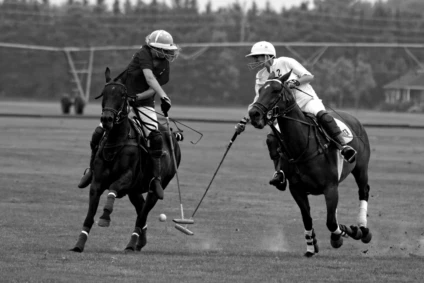
At first instance, the claimants (“Lifestyle”) claimed that the Defendant companies (and two directors of those companies) had infringed its trade marks under s.10(2) and s.10(3) of the Trade Marks Act 1994. The registered marks included the words "Beverly Hills Polo Club" and depicted a polo player on a horse. The Defendant companies sold clothing and footwear with logos displaying the name "Santa Monica Polo Club" and pictures of polo players riding horses.
The two company directors, Mr Ahmed and Mrs Ahmed, were added as Defendants as it was claimed that they had authorised, procured, or engaged in a common design with, the companies to infringe.
The High Court held that the Ahmeds were jointly and severally liable with the Defendant companies for the infringement of Lifestyle’s trade marks. The judge did not think it necessary to determine motive, and made no finding that either Mr or Mrs Ahmed knew or ought to have known that there was a likelihood of confusion or infringement.
The judge held that the Ahmeds were not liable for the full extent of the profits made by the companies from the infringements but were liable to account to Lifestyle for profits personally made from the infringements. He apportioned 10% of their salaries during the relevant period to such profits as well as a company loan made to Mr Ahmed.
Appeal to the Court of Appeal
Lifestyle appealed to the Court of Appeal against the decision that the Ahmeds were not liable to account for the profits made by the company from its infringements. The Ahmeds cross-appealed against the decision that they were jointly and severally liable for the infringing acts of the company and that they had made profits from those infringements for which they had to account to Lifestyle.
The Court of Appeal dismissed Lifestyle's appeal and rejected most of the Ahmeds' grounds of appeal. On the Ahmeds' appeal, the Court of Appeal upheld the judge's conclusions that the Ahmeds were jointly and severally liable for the infringing acts of company and that they should be ordered to account for profits which they had personally made from the infringements. The Court of Appeal agreed with the High Court judge as to the 10% of the Ahmed’s salaries being apportioned to the account of profits but found that the loan to Mr Ahmed was not to be treated as a personal profit.
Findings of the Supreme Court
The key questions then appealed to the Supreme Court were:
- Was the Court of Appeal wrong to hold that the Defendants were jointly liable with their company, despite there being no evidence of them having any knowledge that their signs were infringing the Claimant’s trade marks?
- Was it appropriate to award an account of profits?
The Supreme Court reversed the Court of Appeal’s decision and found that the Ahmeds were not liable for the infringing actions of the company, as they had not willfully or knowingly acted in relation to a trade mark infringement. It would therefore be unjust to hold them personally liable. Lord Leggatt clarified that knowledge that an act is unlawful means having knowledge about “the essential facts which make the act unlawful”, which the company directors did not have in this case. The director liability was therefore assessed separately to the infringing company (which was held to strict liability).
Furthermore, the Supreme Court held that since accessory liability required knowledge, which was not found in this case, the question of accessory account of profits did not arise. However, Lord Leggatt concluded that had the individual directors been found personally liable for the infringement, they could only be liable for those profits personally made. He considered that the salaries paid to the directors were “ordinary remuneration for their services” and that an employee who receives no more than “fair market value” for their services does not make a profit.
What does this mean in practice?
Practically, this judgment makes it more difficult in certain circumstances to seek remedies from company directors for the acts of a company. This impacts claimants who are also unable to seek remedies from the company (for example because the company has gone into liquidation or does not have enough assets to pay damages).
In respect of intellectual property rights infringement, it is assumed that in cases of clear counterfeits this will not be a concern, as directors can be expected to have knowledge. However, in less clear-cut cases of infringement, knowledge of the infringement on behalf of a director will need to be proven. This adds an extra dimension for claimants to consider prior to a claim. It is also a reminder of how crucial documentary evidence is - in this case to prove or disprove knowledge of the essential facts which make the infringement unlawful.
Related
Trade mark protection in disputed territories: Where should you register?
- IP Basics
- Trade Marks
Sharks and Bulls in the gym - GymShark V GymBull
- Look-a-likes
- Fashion
- Sport
- Trade Marks
- Brand Protection
- Disputes + Litigation

First to use versus first to file
- IP Basics
- Trade Marks

Global Design Protection accelerates in 2026
- IP Basics
- Designs + Copyright
- Trade Marks