
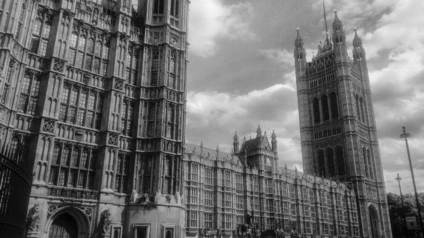


The House of Lords has voted to approve an amendment to the Data (Use and Access) Bill which has important implications for Copyright holders in the creative industries and Artificial Intelligence.
Following the defeat of various amendments relating to intellectual property rights and AI in the House of Commons last week, the House of Lords, led by Lady Kidron, has voted through an amendment that seeks to protect the creative industries and hold AI providers accountable in how they use copyright work.
The stakes are high, with the creative industries contributing billions to the UK economy.
In an important address, Lady Kidron gave a stark warning to the government on the challenge AI poses to the creative industries, if left without regulation.
"This issue is causing real concern for copyright owners and so many others in the creative industries. Let us remind ourselves that the creative industries contributed £124 billion in gross value added to the UK economy in 2023 and outperformed the UK economy between 2010 and 2023 in terms of growth."
She went on to rebut the notion that this is the wrong bill at the wrong time:
"AI did not exist in the public realm until the early 2020s. The speed and scale at which copyright works are being stolen is eye-watering. Property that people have invested in, have created, have traded and that they rely on for their livelihood is being stolen at all parts of the value chain. It is an assault on the British economy, happening at scale to a sector worth £120 billion to the UK, an industry that is central to the industrial strategy and of enormous cultural import. It is happening now, and we have not even begun to catch up with the devastating consequences.
"They are stealing some of the UK’s most valuable cultural and economic assets—Harry Potter, the entire back catalogue of every music publisher in the UK, the voice of Hugh Grant, the design of an iconic handbag and the IP of our universities, great museums and library collections. Even the news is stolen in real time, all without payment, with economic benefits being taken offshore. It costs UK corporations and individuals their hard-earned wealth and the Treasury much needed revenue. It also denudes the opportunities of the next generation because, whether you are a corporation or an individual, if work is stolen at every turn, you cannot survive. The time is now, and this Bill is the vehicle."
However, it was also highlighted that this is not a battle between technology and creatives, but rather an opportunity to regulate how one can benefit the other.
"Amendment 49B would simply provide that a copyright holder be able to see who took their work, what was taken, when and why, allowing them a reasonable route to assert their moral right to determine whether they wish to have their work used, and if so, on what terms."
The amendment is set out below in full:
“Requirement to make provision in relation to transparency of business data used in relation to AI models
(1) The Secretary of State or the Treasury must by regulations make provision as set out in this section in relation to a trader which operates a service which—
(a) includes the making available of an artificial intelligence (AI) model, and
(b) has links with the United Kingdom within the meaning of subsection (2), and in relation to a data holder for the business data of such a trader.
(2) The service has links with the United Kingdom if—
(a) it has a significant number of United Kingdom users, or
(b) United Kingdom users form one of the target markets for the service (or the only target market).
(3) A “data holder” for the business data of such a trader means—
(a) the trader, or
(b) a person who, in the course of a business, processes that data.
(4) The regulations must require specified business data to be published by the trader or the data holder so as to provide copyright owners with information regarding the text and data used in the pre-training, training, fine-tuning and retrieval-augmented generation in the AI model, or any other data input to the AI model.
(5) The regulations must require the business data to be published by the trader or the data holder in such form, at such intervals and in such manner as the regulations may prescribe, in particular so as to ensure that it is accessible to copyright owners upon request.
(6) The regulations must require the trader or the data holder, when publishing the business data as required under subsections (4) and (5), to provide an effective mechanism to allow copyright owners to identify all individual works that they own that are used in the pre-training, training, fine-tuning and retrieval-augmented generation in the AI model, or any other data input to the AI model.
(7) The regulations may provide that the regulations apply in modified form in order that they apply proportionately to small companies and micro-entities within the meaning of the Companies Act 2006, or apply differently to UK-registered companies within the meaning of the Companies Act 2006 as opposed to companies which are not UK-registered.
(8) The regulations must require the trader, if bots are used in the making available of its AI model, to disclose information regarding the identity of such bots used by them or by third parties on their behalf, including but not limited to—
(a) the name of the bot,
(b) the legal entity responsible for the bot, and
(c) the specific purposes for which each bot is used.
(9) In this section “bot” means an autonomous software application that can interact with systems or users (including crawlers and fetchers) and which obtains data from websites in accordance with instructions.
(10) The regulations must make provision for enforcement of the regulations made under this section in accordance with sections 8 (enforcement of regulations under this Part), 9 (restrictions on powers of investigation etc) and 10 (financial penalties) of this Act as if this section were in Part 1 of this Act.
(11) The Secretary of State or the Treasury must lay before Parliament a draft of the statutory instrument containing regulations under this section within 12 months of the day on which this Act is passed and the regulations are subject to the affirmative procedure.””
Lady Kidron stated: If this Bill does not protect copyright then, by the time that the Government work out their policy, there will be little to save.
Let us hope the Government takes note in time.
Related

Suriname to introduce service marks
- IP Basics
- Trade Marks

Influencer content: The IP rights fashion brands need to secure
- Fashion
- Designs + Copyright
- Commercial Contracts
- Advertising + Marketing
Trade mark protection in disputed territories: Where should you register?
- IP Basics
- Trade Marks
Sharks and Bulls in the gym - GymShark V GymBull
- Look-a-likes
- Fashion
- Sport
- Trade Marks
- Brand Protection
- Disputes + Litigation