
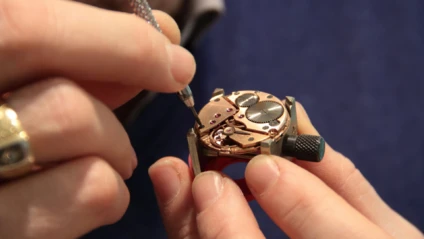


As luxury counterfeits become increasingly difficult to distinguish from genuine products, effective brand protection must go beyond individual takedowns. We explore the rise of the super clone and the importance of proactive, intelligence-led online enforcement.
In August 2026, WIRED published an investigation into the growing sophistication of counterfeit luxury watches. Having purchased a $498 counterfeit Rolex Oyster Perpetual, its journalist visited the brand's London flagship store, where staff adjusted the bracelet without identifying the watch as a fake. Although no formal authentication took place, the encounter raises an important question for luxury brands: if replicas can pass routine inspection, how can rights holders identify and address the online trade supplying them?
The rise of the super clone
WIRED bought three counterfeit Rolexes. An independent specialist found defects in their bracelets and movements, but reported that manufacturers had since replicated a mechanical feature previously useful in spotting fakes. The watches were not impossible to authenticate, but the familiar signs of a counterfeit were becoming less dependable.
The risk extends beyond customers who knowingly buy replicas. In the secondary luxury market, a convincing fake may be sold to someone who believes it is genuine. Research published by the UK Intellectual Property Office (IPO) in September 2026 found that 17% of surveyed UK adults had unknowingly purchased counterfeit goods at some point. While that figure spans multiple product categories, it highlights a wider problem: increasingly convincing counterfeits are reaching consumers who never intended to buy fake goods.
The challenge of enforcing trade mark rights
In the UK, Section 10 of the Trade Marks Act 1994 provides brand owners with protection against the sale and advertising of counterfeit goods. Offering a counterfeit watch for sale online, even if described as a "replica", may still constitute trade mark infringement. The legal position is often relatively straightforward. The greater challenge is identifying suspicious listings and gathering enough evidence to take effective action.
Online listings are not always straightforward to assess. A photograph may be inconclusive, and genuine second-hand watches can lawfully be advertised using a brand's trade mark. Distinguishing suspected counterfeits from legitimate resale activity often requires looking beyond the listing itself.
WIRED found dealers advertising on social media, arranging sales through WhatsApp and drawing on online communities that review replica watches in considerable detail. An individual listing is therefore only one visible part of a wider sales operation.
Beyond the takedown
Removing an infringing listing can stop an offer without stopping the seller. The same operation may reappear under another account or domain, leaving brand owners to repeat the process without understanding the distribution network.
There is a further difficulty with super clones: the features that distinguish a counterfeit may be impossible to assess from an online photograph. Even a close-up image cannot reveal the internal movement examined by WIRED's specialist. Looking beyond the product image, to seller histories, shared contact details and recurring listings, can help brands identify which offers warrant further investigation.
An effective online brand protection programme should therefore combine monitoring with intelligence gathering. Evidence collected across marketplaces, websites and social media can help identify repeat sellers and links between accounts. Where justified, test purchases and expert examination can resolve questions that listing photographs cannot. The resulting evidence may support platform complaints and, where appropriate, coordinated legal or customs action.
This approach calls for judgment. Not every discussion of replicas is an infringing offer, and a suspected connection between sellers must be evidenced rather than assumed. A high number of takedowns may show how much content has been removed; it does not necessarily show whether repeat infringement has been disrupted.
From detection to disruption
The WIRED investigation does not establish that Rolex cannot authenticate its watches. It shows the limits of waiting until a counterfeit is physically in front of someone before recognising the problem.
For brand owners, individual takedowns remain useful, but they should form part of a wider evidence-led strategy. The aim is not merely to remove the latest listing. It is to understand who is selling the counterfeits, how buyers are finding them and where intervention may prevent the next sale. In an era of super clones, effective brand protection is about moving from detection to disruption.
Related

Hold the .phone (in your domain portfolio)
- Telecoms
- Tech
- Domains
- Brand Protection
- Trade Marks

When does a restomod stop being a Porsche?
- Automotive
- Trade Marks
- Brand Protection

Sports Direct's "50% Off" ad banned: Why the ASA's crackdown on RRP claims should be on every retailer's radar
- Fashion
- Advertising + Marketing

Influencer content: The IP rights fashion brands need to secure
- Fashion
- Designs + Copyright
- Commercial Contracts
- Advertising + Marketing