
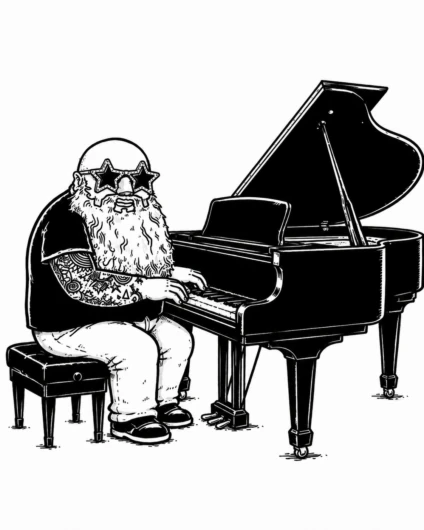


This case is a little reminder that the case law on conceptual comparison between two first names or surnames is still not settled.
Back in 2022 a South African company, Universal Brand Group Pty Ltd, filed an EU Trade Mark for "Elton" in Classes 9, 11 and 30 for a limited specification all related to hot beverages (coffee machines, coffee capsules, coffee, etc).
Opposition Division decision:
The application was opposed in its entirety by a Swedish company, Elon Group AB. They are a retail chain for home appliances mainly active in Scandinavia. The opposition was based on likelihood of confusion only and they relied on their Swedish Trade Mark for ELON in Classes 6-9, 11, 14, 16, 17, 19-21, 35-37 and 42 and an EU Trade Mark.
This EU earlier mark was facing an invalidity action at the time. But as the Swedish earlier right was registered, the opposition continued. This is surprising as in some cases, the opposition would have been suspended until a final decision was issued on the invalidity.
The opposition was partially upheld against goods in Classes 9 and 11. More interestingly, the decision stated that even though the marks are visually and aurally similar to a high degree, they are conceptually different. As the signs are different personal names and convey distinct meanings, they cannot be conceptually similar.
Board of Appeal decision:
Disappointed by this result, the applicant appealed this decision. They argued that the relevant territory was the EU, not Sweden and that both marks are well-known personal first names. To prove this point, they filed evidence regarding the profiles of Elon Musk and Elton John. They added that the signs are short and should be compared accordingly and that the stylisation of the application is “extreme and bold”. To argue that the marks are aurally different, they also filed a linguistic report regarding the pronunciation of both marks.
The argument regarding the stylisation of the application was entirely dismissed. It was considered that the stylisation does not divert attention from the word element which is the clear distinctive element.
Even though this new evidence was accepted as it was considered relevant and the delay was not due to negligence, the appeal was dismissed. The Board of Appeal maintained that the relevant territory is Sweden. Regarding the linguistic report, it was not taken into consideration as its reliability was challenged by the opponent and no evidence of its reliability and authenticity was provided. Moreover, it is the tribunal’s responsibility to assess the aural similarity. The Board of Appeal sided with the Opposition Division and upheld their original decision.
According to established case law, where at least one of the signs has a clear and specific meaning that is readily understood by the relevant public, this can affect the overall perception of the signs. In such circumstances, it may be concluded that the signs create a different overall impression, even if there are some visual or phonetic similarities between them.
The Wikipedia pages submitted regarding the two famous individuals were not considered sufficient as they only confirm that these two persons are well known. They also do not prove that the Swedish average consumer would usually link the single names ‘ELTON’ or ‘ELON’ to them. There is no strong evidence to prove this point, especially since these figures are mainly known by their full names. Instead, it was decided that many people in Sweden would see both signs as just normal first names. This is even more likely because of the types of goods involved which are not linked to these celebrities.
The Board of Appeal also highlighted a comment from the General Court that case law is not fully consistent on how to carry out a conceptual comparison when signs refer to people’s first names or surnames. Indeed, according to one approach, the presence of a first name or surname makes a conceptual comparison possible, but it does not automatically mean the signs are conceptually similar; this must be assessed on a case-by-case basis. According to another approach, such a comparison is generally not possible, and the marks are considered as conceptually neutral, unless there are special circumstances – such as the person being well known or the name having a clear meaning – that allow for a conceptual link to be made.
In recent judgments, the General Court sided with the second option and considered that conceptually the signs are neutral. For these reasons, the Board of Appeal considered that conceptually the signs are not different, but neutral.
For all these reasons, the appeal was dismissed.
General Court decision:
The Applicant appealed once again.
They argued that as Elon Musk and Elton John are very famous, it is unlikely that the average Swedish consumer would not link at least one of the signs to these celebrities. They added that consumers are used to making connections between products and celebrities. They pointed out that George Clooney is widely associated with Nespresso coffee machines.
The General Court sided with the Board of Appeal which pointed out that Elon Musk and Elton John are not associated with coffee in the mind of the relevant public and that no evidence in that sense was provided by the Applicant. The fact that George Clooney is associated with coffee machines is irrelevant here, as unlike Elon Musk and Elton John, he has been a brand ambassador for Nespresso for years with multiple marketing campaigns run over the years.
Unfortunately, the CJEU will not rule on the conceptual comparison, as the Applicant did not appeal the decision this time.
Key Takeaways:
This case highlights the importance of considering the case for what it is and not extrapolating the potential understanding of the signs the average consumer might have.
If you wish to launch a product abroad, it is always best practice to conduct a search sufficiently in advance to avoid any setbacks and potential rebrands in some territories which could disrupt the supply chain.
Related

Descriptiveness killed the radio lawsuit - Classic Hits® Radio v Greatest Hits Radio
- Arts & Entertainment
- Trade Marks
- Disputes + Litigation

Wish, AliExpress and the shifting boundaries of platform liability
- Tech
- Anti-Counterfeiting
- Brand Protection
- Trade Marks
- Disputes + Litigation
Hold the .phone (in your domain portfolio)
- Telecoms
- Tech
- Domains
- Brand Protection
- Trade Marks

When does a restomod stop being a Porsche?
- Automotive
- Trade Marks
- Brand Protection