
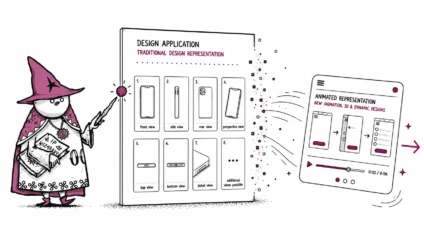


The European Union’s Design Reform is now fully operational at EUIPO level as of 1 July 2026. Some provisions of Regulation (EU) 2024/2822 (the “Amending Regulation”, amending Council Regulation (EC) No 6/2002 (the “CDR”)) applied from 1 May 2025 (Phase I), with the remaining provisions and implementing framework applying from 1 July 2026 (Phase II). Uniformity across the EU is not yet complete: while the Regulation has direct effect at EU level, national design laws will change only once the recast Designs Directive is transposed.
To recap briefly, Phase I brought updated terminology, with the outdated Community Design now renamed the European Union Design. Correspondingly, the Registered Community Design (RCD) becomes the Registered EU Design (REUD) and the unregistered Community design the unregistered EU design. The definitions of “design” and “product” were broadened to reflect modern realities and explicitly encompass animation, movement and transition as well as non-physical items such as user interfaces. The unity of class requirement was abolished and direct filing with the EUIPO is now required. Exclusive rights were extended to acts connected with 3D printing and also limited by referential use (echoing trade mark practice) as well as acts of comment, critique or parody (echoing copyright law).
Ⓓ was introduced for marking of design protected products. The new permanent, harmonised repair clause for ‘must-match’ component parts (replacing the previous ‘freeze-plus’ regime which allowed Member States to maintain their own divergent national rules and caused decades of legal uncertainty across the bloc) was introduced and entitlement proceedings improved. The fee structure was simplified and costs updated; notably, renewal fees rose substantially at later renewals.
While Phase I introduced the core legislative reforms, many of the practical changes required secondary legislation and detailed implementing rules, which are now fully applicable. In particular, the new legal framework comprises:
- The codified European Union Design Regulation (EUDR) (Regulation (EU) 2026/715), consolidating all EU design rules;
- The Delegated Regulation (EUDDR), Commission Delegated Regulation (EU) 2026/137, containing additional procedural rules;
- The Implementing Regulation (EUDIR), Commission Implementing Regulation (EU) 2026/138, containing further implementing rules.
Arguably the most important Phase II development concerns how designs can be represented in an application. Historically, EU design protection was built around static images. This created challenges for products whose visual appearance depended on movement, animation or transition. From 1 July 2026, applicants can now file designs using modern digital formats. The EUIPO now accepts:
- Static image representations;
- Dynamic 3D representations (OBJ and STL files); and
- Animated representations (MP4 video files).
These should not be combined to represent a single design, though different designs within the same multiple application may use different representation types. Applicants should familiarise themselves with file size limits and technical requirements to streamline the application process.
This update is transformative for industries such as software, gaming, consumer electronics, virtual reality, augmented reality and digital product design. Animated interfaces, screen transitions, moving icons and other dynamic design features can now be represented in a manner that accurately reflects how users experience them in practice.
However, applicants should consider that other jurisdictions may not recognise dynamic or animated designs and they may therefore struggle with claiming priority from the EU filing. Where onward filings are contemplated, applicants should consider adding static views capable of supporting a priority claim as an additional design in the application.
In addition to new file formats, changes have also been made to static image representation. The number of static views available to depict a design was previously restricted to seven. The new rules permit applicants to submit up to ten static views, giving applicants greater flexibility for products with multiple components, intricate details or with different configurations, helping to define the scope of protection more clearly.
Further formalistic restrictions have been lifted, in particular neutral background and image quality are no longer filing date requirements. The focus is now on ensuring that the design is represented with sufficient clarity, including visual disclaimers to narrow scope of protection.
Another major procedural step is the transition to fully electronic communication, supporting faster, more efficient administration and reflecting the broader digitalisation objectives of the reform package. Deferment of publication is also streamlined: publication is automatic after a 30-month deferment period (unless the application is explicitly surrendered at least 3 months before the period expires), and non-payment of the deferment fee at filing now leads to rejection of the application.
Phase II also introduces new procedural rules for invalidity actions. The new framework seeks to make proceedings clearer and more efficient by clarifying filing and evidence requirements. Designs may still be declared invalid after they have lapsed or been surrendered, if the applicant can show a legitimate interest. Further, invalidity applications can now be based on prior designs with an earlier filing date, independent of the date of disclosure of the prior design. In certain uncontested cases, namely if the invalidity application is based on lack of novelty or individual character and the design holder fails to defend the registration, the EUIPO may now deal with the invalidity application on a priority basis, thereby leading to faster decisions. Unfortunately, evidence in these proceedings is still restricted to JPEG or PDF format, which is one area that still requires modernisation.
While the Reform is now fully operational on EU level, the Recast Directive (Directive (EU) 2024/2823), which will provide further harmonisation of the Member States’ national laws, is to be transposed by 9 December 2027. In the UK, we are still waiting for the results of last year’s Consultation on changes to the UK designs framework, and much needed modernisation.
Related

Influencer content: The IP rights fashion brands need to secure
- Fashion
- Designs + Copyright
- Commercial Contracts
- Advertising + Marketing

.RU Ready? Russia tightens .ru, .рф and .su domain rules
- Domains
- Brand Protection
U.S. Congress Contemplating Federal Right of Publicity
- AI
- Look-a-likes
- Celebrity
- Advertising
- Brand Protection
- Advertising + Marketing
Sharks and Bulls in the gym - GymShark V GymBull
- Look-a-likes
- Fashion
- Sport
- Trade Marks
- Brand Protection
- Disputes + Litigation