
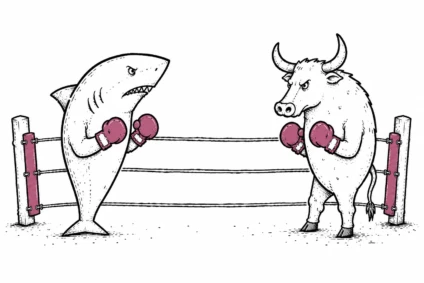


A recent UKIPO opposition highlights the power of a strong bad faith claim, and also provides a diverting analysis of the core differences between sharks and bulls!
The Opposition
GymShark, the gym-wear and athleisure brand popular across Instagram and TikTok (as well as sometimes at the gym) filed an opposition against a UK trade mark application in class 25 for GymBull.

GymShark claimed likelihood of confusion with their registered GYMSHARK mark, passing off, unfair advantage of the reputed GYMSHARK marks and bad faith.
The opposition was successful in part on the reputation ground for sportswear only. However, GymShark won out in the end against the whole specification when the opposition succeeded on the bad faith ground.
Confusion between Sharks and Bulls
The opposition failed in respect of the likelihood of confusion ground. The Hearing Officer was of the view that the words shark and bull are sufficiently distinct given that they are different animals. Whilst GymShark did submit some compelling arguments i.e. both are large, strong and aggressive animals (clearly the kind that would be regulars at their local gyms) and both are often used in relation to sports teams, the Hearing Officer was unpersuaded and found that the marks were only similar because of the overlapping GYM element. Since this term is descriptive of gym clothes, the marks were considered of only low similarity.
Despite the goods being identical and similar, no direct or indirect confusion was found.
GymShark’s Reputation
Positively for GymShark, the Hearing Officer found that the GYMSHARK mark has a reputation in the UK in relation to sportswear and the retail thereof in view of their extensive use in the UK and their strong online and social media presence.
The Hearing Officer then went on to say that a mark beginning with Gym and followed by any other word, would create a mental association with GymShark. This is generous to say the least and is at odds with the earlier finding that GYM is descriptive in relation to sportswear. Regardless, because of this link, the opposition was successful in relation to sportswear goods and retail thereof.
Passing Off
Given that the opposition failed in relation to confusion, it is not surprising that the opposition also failed on the grounds of passing off, which requires a misrepresentation.
Bad Faith
Bad faith is not a commonly pleaded ground as the bar for success is high. The opponent must demonstrate that an applicant has filed the application for reasons that are contrary to honest commercial business practices – often hard to prove.
There is a presumption of good faith and the onus is on the opponent to show evidence that the application was filed in bad faith. However, if this can be shown, the onus then shifts to the applicant to provide a logical commercial reasoning behind the application.
In this case, the opponent submitted examples of a large number of applications filed by the applicant that were similar to third party rights - our favourites being Upper Armour and The South Face.
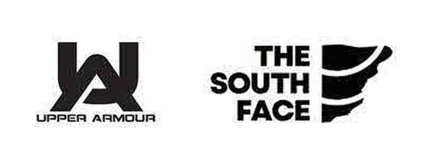
The opponent claimed that this history of filing marks that are similar to existing third party brands showed that the GymBull application was filed with no intention to be used and only to mislead the public or to create a conflict with earlier rights holders.
The opponent also included a reference in their arguments to the well known Red Bull trade marks, given the inclusion of the bull image within the mark that, one could argue, is close to the Red Bull mark. Whilst GymShark has no connection to Red Bull, they were entitled to include these arguments as bad faith can be claimed by anyone on any grounds.
The applicant denied these arguments and submitted the unusual explanation that the applications were filed as parodies. This argument failed, not least because the Hearing Officer did not find the mark to be amusing. Unfortunately for the applicant, the parody argument worked against them as it was enough to convince the Hearing Officer that they were aware of this pattern of behaviour and knowingly filed marks similar to third parties.
The opposition was successful under this ground as the applicant was unable to provide a satisfactory commercial explanation for the application (or indeed for any of the prior marks).
Takeaways
This case is a good reminder that it is important to review all facets of an application when considering an opposition, including the owner and their background and history of filings. GymShark would have only been successful against a fraction of the goods if they had not claimed bad faith.
The decision illustrates how a documented pattern of serial filings targeting well-known brand logos can establish a prima facie case of bad faith under UK trade mark law, shifting the burden to the applicant to provide a credible commercial justification. It also shows that a bad faith claim operates independently of, and can be broader than, a reputation or confusion claim. Further, the case demonstrates that invoking "parody" as a defence can backfire, since it may be read as an admission of deliberate intention to target third party brands.
Finally, it is worth noting that often a hearing is an effective forum to enable parties to walk the Hearing Officer through their evidence and to answer any questions they might have, and can be a persuasive tool in reaching a successful outcome.
Related

Video game development – The dangers of relationship breakdown
- Tech
- Arts & Entertainment
- Disputes + Litigation
- Commercial Contracts

Hold the .phone (in your domain portfolio)
- Telecoms
- Tech
- Domains
- Brand Protection
- Trade Marks

When does a restomod stop being a Porsche?
- Automotive
- Trade Marks
- Brand Protection

Sports Direct's "50% Off" ad banned: Why the ASA's crackdown on RRP claims should be on every retailer's radar
- Fashion
- Advertising + Marketing