
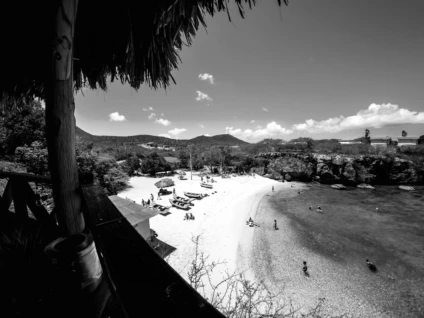


If possible, I like to combine my trade mark travels with my real-life travels. Yes, you’re right, that makes me very sad – but humour me and you may find this useful if looking to protect trade marks in the ABC Islands.
The ABC Islands – more precisely, Aruba, Bonaire and Curaçao - form part of the Dutch Caribbean and are part of the Kingdom of the Netherlands. I’ve recently spent a week on the first, Aruba, which you can tell from some of these photos, was awful…
Netherlands Antilles †
They all formed a part of the Netherlands Antilles. To this day, when we onboard new portfolios to our systems we often come across registrations in the Netherlands Antilles, which I think demonstrates the complexities of trade mark registration in these territories. The Netherlands Antilles has not existed since 2010 – yes, nearly 15 years ago.
Aruba was the first to depart the Netherlands Antilles when it achieved status aparte in 1986. This is revered in Aruba along with the politician who worked so hard for this, Betico Croes. He was seriously injured in a traffic accident, from which he never recovered, on 31 December 1985 - just one day before they achieved their independence.
The Netherlands Antilles continued with other islands before finally being dissolved in October 2010.
Aruba
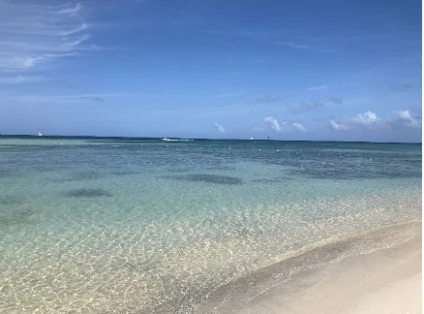
Aruba operates a national trade mark system. It is not available to be designated in an International trade mark and, like the other islands, despite being a part of the Kingdom of the Netherlands, it is not covered by either a Benelux or European Union trade mark.
The locals are proficient in four languages, being taught them early in their education. These are Papiamento (a Portuguese/Spanish creole language with influences of Dutch – ‘thank you’ is the rather cute, ‘danki’), English, Dutch and Spanish. My monolingualism being shown up once again.
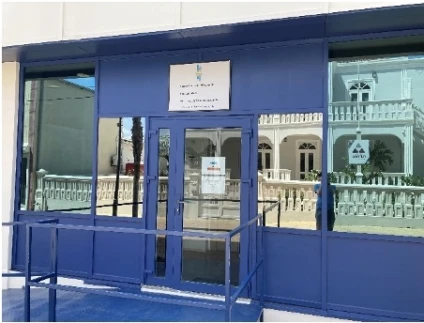
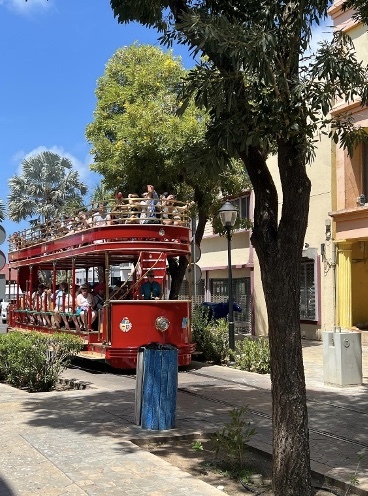
It has an efficient Trade Marks Office, the Bureau of Intellectual Property, located on a road named after the aforementioned politician, next to Oranjestad’s tram line (possibly the only streetcar line in the Caribbean).
Trade mark registration is usually granted in as little as three months with objections rarely being raised. However, there is no opposition procedure. You do have to pay an additional official fee if you want a General Power of Attorney not to be time limited, which is a quirk.
There is little appetite to joining the International system among local practitioners I’ve spoken to because the Aruban system is very administrative so they would not benefit from many dealings with objections and there is little in the way of contentious work. It’s a developed island and, although there were little stalls by the port that may have been selling ‘unofficial’ merchandise, counterfeiting did not appear to be rife. Aruban businesses are not exporting much to use the system themselves either.
According to the Museum of Industry, Aruba’s economy is 80% dependent on tourism, mostly from the US. I’d suggest (and so would some locals) that it may be higher than this with sectors such as retail and wholesale effectively supporting tourism. Aruba appreciates that sustainability is important but that diversifying the economy is also tricky.
Local brand success
It was interesting to visit the Aruba Aloe factory and museum. Tiny Aruba once supplied 30% of the world’s aloe, which was originally used to produce laxatives. When these could be produced synthetically, they developed skincare (including pharmaceutical level skincare to treat severe burns). How a product that was designed to help you go can now be applied topically may explain why I am not a scientist.
They have trade mark protection in Aruba, the EU, the UK and the US, their key markets, but export to c. 60 countries. Of course, you do not have to protect everywhere but they could probably do with a review. Perhaps I should have found space for my business cards in my shorts.
They also have a local beer brand too, BALASHI, ubiquitous on the island. This pale white person may have had a need for both skincare and cold beer…
Curaçao
On dissolution of the Netherlands Antilles in 2010, Curaçao became a constituent country of the Kingdom of the Netherlands (like Aruba already was) and thus a trade mark jurisdiction in its own right. Netherlands Antilles registrations became Curaçaoan registrations. (Netherlands Antilles registrations became registrations in Sint Maarten too, each to be maintained separately; Sint Maarten is another part of the Dutch Caribbean located further north.)
Curaçao operates a national trade mark system, which like Aruba’s is fairly efficient with objections rare, registration often being granted in three-four months, but with no opposition procedure.
It can also be designated in an International trade mark. This is sometimes overlooked as Curaçao is not listed as a specific member of the system; you have to scroll down to footnote 11 to see that the Kingdom of the Netherlands’ ratification also covers Curaçao.
Bonaire
Much smaller in population and the most easterly of the islands is Bonaire. The islands do not run in ABC order.
Bonaire is not a country of the Kingdom of the Netherlands (as Aruba and Curaçao are). It is a Caribbean public body (or special municipality) of the Netherlands. It is one of three; the other two are Sint Eustatius and Saba located further north.
As a trade mark jurisdiction, they are combined as Bonaire, Sint Eustatius and Saba otherwise referred to as the Caribbean Netherlands or the BES Islands.
When the Netherlands Antilles dissolved, local registrations were not created automatically. They had to be specifically requested within one year and, in my experience, this was often overlooked.
Their Trade Marks Office is super-quick as it’s a deposit system so registration can be achieved in a few weeks or less. Stobbs work directly with this Office and hold a current account with them.
It can also be designated in an International trade mark. Not a lot of people know this, but once an International registration that designates Bonaire, Sint Eustatius and Saba is issued, it is instantly protected there. There is no local examination. It will look like this on Madrid Monitor:
Summary table
| Population roughly | National TM | Benelux TM | EUTM | International TM | |
| Aruba | 108,000 | Y | N | N | N |
| Bonaire | 25,000 | Y with Sint Eustatius and Saba | N | N | Y |
| Curaçao | 155,000 | Y | N | N | Y |
Brand owners looking to ensure their trade marks are protected in this region should feel assured that there are efficient trade mark registration systems in place. Food and drink providers and those involved in hospitality, hotels and casinos, etc., in particular, will have peace of mind given the dominance of the tourist industry.
Related
The rising tide of copycat litigation: recent UK copycat case law and what brands need to know
- Fashion
- Trade Marks
- Designs + Copyright
FIFA World Cup 2026 and Ambush Marketing: What brands can and can’t do
- Sport
- Advertising
- Advertising + Marketing
- Commercial Contracts
- Designs + Copyright
- Trade Marks
- Brand Extension
Mind the Gulf - Free Trade Agreements
- Trade Marks
- Designs + Copyright
Got an EUTM, got Europe
- Trade Marks