
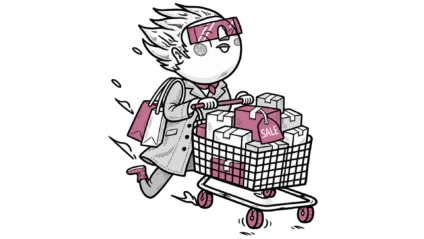


What is Singles' Day?
Singles' Day, also known as Double 11, is a major online shopping event held each year on 11 November. It originated in China as an informal celebration of single life but has since been commercialised by Alibaba and developed into one of the world's largest online shopping events. It now extends beyond Alibaba to other major e-commerce platforms, including Taobao, Shopee and JD.com.
Why Singles' Day creates greater opportunities for infringement
Singles' Day is significant in the brand protection space, as increased consumer demand, extensive discounting and high volumes of promotional content can make it more difficult for consumers to distinguish genuine offers from counterfeit or fraudulent activity.
The rising popularity of dupes and lower-cost alternatives amongst consumers also creates opportunities for bad actors during discount-led events such as Singles' Day. UKIPO research reported that 20% of 18 to 24-year-olds who bought beauty products during 2025 knowingly purchased counterfeits, up from 6% in 2023, while 71% of consumers who bought counterfeit cosmetics and toiletries did so online.
This appetite for cheaper alternatives gives counterfeiters a ready audience, whilst the prevalence of genuine discounts can make unusually low prices appear less suspicious and infringing listings harder to distinguish from legitimate offers.
The increasingly blurred boundaries between social media, online marketplaces and standalone retail websites can also heighten risk, allowing trends, advertisements and links to listings to spread quickly across multiple channels.
How infringers can capitalise on Singles' Day
Against this backdrop, infringers can exploit Singles' Day and other sales periods through online marketplaces, domains, websites, social media and advertising. For example, counterfeit products may be offered through marketplace listings alongside large volumes of legitimate discounted goods.
Infringers may also register domains incorporating trade marks and brand names and use them to host impersonation websites promoting counterfeit goods or for phishing purposes.
Stobbs' research into domains associated with the holiday shopping period found that, of the 6,148 domains analysed, 28% resolved to a live website, while 40% had active mail records, meaning they could potentially be used for email-based scams even where no live website was visible.
Further, Stobbs analysis of domains enforced during the 2025 holiday shopping season found that, while .com accounted for 60.3% of the dataset, retail-focused extensions such as .store and .shop were disproportionately represented relative to their overall registration volumes. These findings are consistent with the patterns Stobbs is seeing in practice across its client base.
Social media provides another route to consumers. Stobbs has observed, for example, influencers on TikTok promoting dupe or counterfeit fashion products and redirecting users to listings for those products on marketplaces such as DHgate, Alibaba and AliExpress. Some use coded references, including referring to DHgate as 'yellow app', making potentially infringing content more difficult to identify through conventional searches. Such promotion may begin with a social media post or paid advertisement but ultimately lead consumers to an infringing marketplace listing or even an impersonation website.
Steps brands can take before Singles' Day
Increase monitoring and revisit earlier findings
Brands should increase monitoring of priority products and sellers across relevant marketplaces, incorporating both established search terms, such as “shop” and “discount”, and emerging or coded terms, such as “yellow app”.
In addition, revisiting previously identified suspicious content, perhaps dormant domains, inactive listings and low-volume accounts identified through earlier monitoring may identify new activity. Infringers may activate existing infrastructure shortly before a sales event or reuse accounts that have already acquired followers or reviews. Changes in content, redirects, mail configuration and links between platforms may indicate that an apparently inactive finding now presents a greater risk.
Prepare enforcement processes for a surge in activity
Harmful content can appear or gain visibility quickly during Singles' Day and other promotional periods. Clear responsibilities and agreed escalation thresholds should be established in advance, and evidence of the infringing activity captured and safely stored, in order to be able to respond to issues quickly and effectively. Prompt action against high-risk issues can help limit their impact and minimise potential harm to the brand.
Monitor and connect infringement across platforms
Brands should monitor activity across online platforms and seek to establish connections between infringements using common data points, such as:
- Seller details
- Contact information
- Payment details
- Domains
- Linked accounts
Tracing links between marketplace listings, social media accounts, online advertisements, domains and websites can help brands identify repeat infringers and uncover the wider network supporting the activity. This allows brands to take more coordinated and effective enforcement action, targeting the wider activity rather than individual infringements in isolation.
Protecting your brand during Singles’ Day and the holiday shopping period
Singles' Day provides a concentrated example of the challenges brands face during major online shopping events. Increased demand, extensive discounting and fast-moving content create an environment in which infringing products and activity can blend in with legitimate promotions.
Increasing marketplace monitoring, revisiting previously identified issues and connecting infringements across platforms can help brands identify and respond to infringements more quickly and effectively.
These measures are equally relevant as brands move from Singles' Day into the wider holiday shopping period, enabling them to protect not only legal rights and brand assets, but also their reputation and consumer trust.
Related
Cleared for take-off? Aviator v Spribe tests global IP enforcement from London
- Disputes + Litigation
- Brand Protection

Marshall succeeds in UK counterfeit headphones case
- Tech
- Anti-Counterfeiting
- Disputes + Litigation
- Brand Protection

Wish, AliExpress and the shifting boundaries of platform liability
- Tech
- Anti-Counterfeiting
- Brand Protection
- Trade Marks
- Disputes + Litigation

Too good to be fake? From detection to disruption
- Fashion
- Anti-Counterfeiting
- Brand Protection