
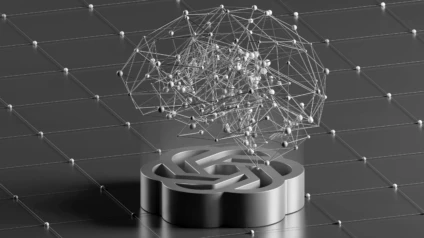


Getty Images has brought an IP infringement claim in the High Court in London against Stability AI.
The claim concerns the alleged copying by Stability AI of millions of copyright works, in respect of which Getty Images is the copyright owner, in order ‘train’ the former’s systems. A set of 'Sample Works' comprised of photos and films is being used to determine liability in the case.
Getty Images is a well-known provider of visual content including digital images. Stability AI is an artificial intelligence service provider offering generative AI services to users who can create images based on text prompts (much like ChatGPT). Its dataset is trained on billions of scraped links from the internet.
Acts complained of
Stability AI is accused of launching a deep learning, text-to-image AI model, in or around August 2022, under a platform known as Stable Diffusion that is used to generate detailed synthetic images in response to text commands and, since at least March 2023, image prompts by users.
It is alleged that Stable Diffusion 1.0 was trained using various subsets of the LAION-5B dataset, which was created by LAION e.V. (a business in Germany which provides datasets for training AI models.) LAION created the LAION-5B Dataset with support from the Defendant.
The LAION-5B Dataset contains billions of URLs which hyperlink to internet locations where there is an image. It was created by scraping links to photographs and videos, together with associated captions, from the web, including Pinterest, WordPress-hosted blogs, SmugMug, Blogspot, Flickr, Wikimedia, Tumblr and, crucially for purposes of the present court case, those of Getty Images.
Stability AI admit in their Defence that "at least some LAION-Subsets contain URLs referencing images on the Getty Images Website". The dataset contains around 5 billion links, and 3 billion image-text pairs, 12 million of which are alleged to link to content on the Getty Images’ website. Further versions of Stable Diffusion have been released, including a version which can use image prompts and Stable Diffusion XL which, according to the Stability Website, "produces more detailed imagery and composition than its predecessor…"
Defendant’s alleged unlawful acts
Copyright infringement
Getty Images claims that the above synthetic image output comprises a substantial part of one or more of the images for which it is the copyright owner and that therefore its copyright rights have been infringed by virtue of Stability AI engaging in the unauthorised reproduction and/or communication to the public of a substantial part of these copyright works. There are also claims made relating to the import of Stable Diffusion into the UK in circumstances where Stability AI knew or had reason to believe that it contained infringing copies of Getty Images’ copyright works.
Furthermore, there are claims made of Database Rights Infringement (over the unauthorised use of the Getty Images database, which required a significant investment each year in the hundreds of millions of pounds), and trade mark infringement and passing off over the reproduction of the Getty Images’ watermark on certain images produced by Stable Diffusion and the likelihood of confusion it would cause consumers and/or unfair advantage and detriment to Getty Images' trade marks.
Defence
Stability AI claims that generating output from Stable Diffusion does not derive any output from the whole or any substantial part of any copyright works owned by the claimant, and nor does it reutilise any of the contents of Getty Images’ database. Stability AI also claims that it has not communicated copies of the Getty Images’ copyright works to any 'public'.
Stability AI further argues that the prompts used to generate the infringing imagery correspond exactly to the caption of a Getty Images’ image and are therefore contrived and not representative of use by normal users.
Stability AI admits that its acts involved the reproduction of images in the training dataset for each iteration of Stable Diffusion, but that such acts took place outside of the UK. It argues that the communication to the public of the alleged infringing images is actually attributable to the individual users of the system and therefore cannot be attributed to Stability AI.
It is also denied that the output of any version of Stable Diffusion running on a local device is a “communication” within the meaning of the term to “communicate the work to the public”. Stability AI claims that its role is mere provision of physical facilities and that it does not grant users any right to generate image output “which would infringe third party rights”.
Pastiche
One novel defence relied upon by Stability AI is the argument that the output, insofar as it includes any element of a copyright work, should be considered as a ‘pastiche’ i.e. an artistic work in a style which imitates another work or is a medley of material, potentially bringing it within the copyright exception under Section 30A of the Copyright Designs & Patents Act 1988 for “fair dealing with a work for the purposes of caricature, parody or pastiche…”. However, Getty Images claims that Stable Diffusion’s output directly competes against its own content and Stability AI may therefore struggle to establish that any pastiche works created constitute ‘fair dealing’.
The final hearing in the High Court case discussed started on Monday this week, so watch this space for how the case will affect AI and IP law going forwards.
Related
Design Law in Motion: Phase II of the EU Design Reform has arrived
- Tech
- Designs + Copyright
- Brand Protection
- Creative
Global Design Protection accelerates in 2026
- IP Basics
- Designs + Copyright
- Trade Marks
Saudi Arabia joins the International trade mark system
- IP Basics
- Trade Marks
- Brand Protection

How FIFA creates a ‘clean’ brand environment at the World Cup and what it means for brands
- Sport
- Commercial Contracts
- Advertising + Marketing
- Trade Marks
- Brand Protection
- Brand Extension