


Operators of the Le Mans motor car endurance race prevent unauthorised use of their trade marks on watches in the UK.
Background
The 24 Hours of Le Mans is an annual endurance sports car race held in Le Mans, France. First run in 1923, it is the world's oldest active endurance race and one of the most prestigious. Unlike fixed-distance races, the winner is the car that covers the greatest distance in 24 hours. Teams must balance speed with reliability to avoid mechanical failure. UK drivers have won the race more often than any other nationality.
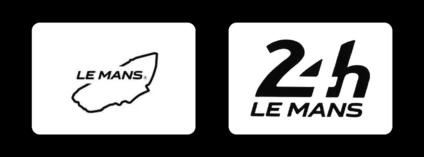
Earlier this year, the race organisers Automobile Club de l'Ouest (ACO) successfully sued a watch manufacturer in the UK Intellectual Property Enterprise Court (IPEC) for infringement of its trade marks, namely the word mark LM and the device marks: the words LE MANS inside the outline of a race track, and a 24h logo above the words LE MANS ([2026] EWHC 2265 (IPEC)).
The defendants were Omologato Limited (Omologato) and Mr Shami Kalra (Mr Kalra), one of its directors. Omologato designs and markets watches including by reference to the signs LM, LMR and LE MANS. An example of one of Omologato’s watches is shown below. This is their “Le Mans ’59 Watch”, which includes the word “Le Mans” both on the watch itself and is the name used to describe the watch (there were also uses of “Le Mans” in the URL for the watch, as a hashtag for social media posts about it, and in phrases such as “our Le Mans Chronograph”).

Evidence of repute
ACO claimed an enhanced distinctive character and reputation in the UK in their LE MANS word and track device mark. The judge held there was ample evidence to show there was this level of repute at least in relation to entertainment in the nature of motor racing.
The judge addressed the issue that it was the LE MANS word mark that was known/reputed, not necessarily the word and track device mark. Citing case law relating to genuine use (Cactus v OHIM T-24/13), the judge said this did not matter so long as the reputation was in a mark that was an ‘acceptable variant’ of the mark as registered. He held “The shape of the race track serves to emphasise the words LE MANS, reputed for the motor race. Use of LE MANS without the race track device does not alter the distinctive character of the mark in the form in which it was registered (because shape of the race track serves to emphasise the words LE MANS, reputed for the motor race). Therefore the reputation/acquired distinctiveness in LE MANS attaches to the [word and track device mark] despite reputation not being evidenced for the [word and track device mark] as registered. I therefore find both reputation and acquired distinctiveness in the [word and track device mark].”
The infringements
- The use of LM on watches was held to be infringement under s.10(1) of the UK Trade Marks Act 1994 (TMA) based on ACO’s registration for LM (which covered watches in class 14) as both the marks and goods were identical.
- The use of LMR on watches was held to be infringement under s.10(2) TMA based on ACO’s registration for LM, as these were similar marks for identical goods and there would be confusion because consumers would, in context, understand that LMR refers to the race (Le Mans Race).
- The use of LE MANS was held to be infringement under s.10(2) TMA based on both of the device marks. LE MANS was held to be the dominant and distinctive component of both devices. The marks were highly similar, and the use was for identical goods. There was a likelihood of confusion (which for the word and track device was also increased due to the enhanced distinctiveness acquired through use).
- The use of LE MANS was also held to be infringement under s.10(3) TMA based on the reputed word and track device. The judge felt it was clear there was the necessary link and that Omologato gained an advantage. On that advantage being unfair he said:
“in my judgment, this is a classic case of unfair free riding. On the evidence before me, Omologato has set out to take advantage of the prestige of the Le Mans race and has used the sign Le Mans (and variants of that sign), aurally identical and visually and conceptually very similar to the [word and track device] in order to bolster sales of its own watches. Omologato’s subjective intention is quite clear … and the court will not bend over backwards to say that that intention has not been achieved.”
The defendants pleaded points to suggest they had due cause to use but the judge did not accept these. In particular, they alleged they had sponsored teams and drivers for ACO’s races and no specific restriction about use of ACO’s marks had been expressed in those, but they did not evidence this and indeed ACO put in their own evidence, to this point, of many agreements that they themselves have in place with teams that expressly say their marks cannot be used on watches (in large part because ACO has a watch sponsorship deal with Rolex).
Other issues
- The defendants tried to argue they had a defence to infringement under s.11(2) TMA that they ought to be able to use LE MANS descriptively. However, this defence has the requirement that the use is in accordance with honest practices which the judge felt it was not here, given his view that the advantage gained by them was unfair and there was no due cause.
- Mr Kalra, the controlling mind of Omologato, was held well aware of the issues and of ACO’s trade marks and the need not to infringe them (evidence showed he even tried to request a licence from them) and he was held to be jointly liable for the trade mark infringements.
- The judge also held that the UK trade mark registration for LMR held by Mr Kalra (which had been filed, one assumes defensively, after receipt of the first cease and desist letter from ACO) should be invalidated (for the same reasons as he found the use of LMR infringed).
- It must be said that the defendants were not represented at the hearing - Mr Kalra had represented himself at earlier stages though was not at the hearing due to illness - and this lack of professional representation likely impacted on the effectiveness of the defence, though ACO’s case was pretty clear cut in my view.
Conclusion
So, ACO were successful with all the objected use held to be trade mark infringement and the objected to TM registration held invalid. A validation of the strength and value of the brand. The Le Mans brand gets to race on and the defendants in this instance will have to ‘watch’ from the sidelines.
Related

Getty Images v Stability AI in the Court of Appeal: can an AI model be an "infringing copy"?
- AI
- Designs + Copyright
- Disputes + Litigation
Cleared for take-off? Aviator v Spribe tests global IP enforcement from London
- Disputes + Litigation
- Brand Protection

Bigger sales, bigger risks: protecting your brand this Singles’ Day
- Brand Protection
- Anti-Counterfeiting
- Domains

Marshall succeeds in UK counterfeit headphones case
- Tech
- Anti-Counterfeiting
- Disputes + Litigation
- Brand Protection